-ai.svg)


## Finding the Perfect Early Learning Home for Your Family
If you're searching for the right daycare in Oregon City, you already know how much this decision weighs on you. You're not just looking for somewhere to drop off your child while you work—you're looking for a place where your little one will laugh, learn, and grow during some of the most important years of their life.
The search can feel overwhelming. Drive down any street in Oregon City, and you'll see signs for childcare centers. Browse online, and you'll find dozens of options, each one claiming to offer the best care. But how do you actually know which one is right for your child and your family?
We've worked with hundreds of Oregon City families, and we've seen what makes the difference between a daycare that's just okay and one that truly nurtures children. Let's walk through what you should really be looking for—and the questions you need to ask—before making this choice.
## What Really Matters: Beyond the Brochures
Every daycare will tell you they provide quality care. But when you dig deeper, you'll see that not all programs are the same. Here's what actually matters:
Curriculum Approach: Does the center follow a real curriculum, or is it basically babysitting? Quality early childhood programs use proven methods, such as a play-based curriculum that recognizes play as how young children actually learn. This doesn't mean chaos—it means thoughtful activities designed to build cognitive, social, emotional, and physical skills through exploration and discovery.
Educator Qualifications: Are the teachers licensed? What's their background in early childhood development? The people caring for your child should have more than just a love for kids—they should understand developmental milestones, age-appropriate activities, and how to support each child's unique way of learning.
Parent Communication: How will you know what your child did today? Quality centers keep you in the loop so you're never left wondering. Look for programs that give you daily updates through an app, regular milestone check-ins, and scheduled parent conferences to talk about your child's progress.
Age-Appropriate Spaces: Does the center have dedicated learning environments? Infants have completely different needs than toddlers, who have different needs than preschoolers. The best programs provide age-specific classrooms and activities tailored to each stage.
## The Tour: What to Look for When You Visit
Once you've narrowed down your options, it's time to visit in person. A website can only tell you so much—you need to see the space, meet the teachers, and trust your gut. Here's what to observe:
### The Physical Environment
-
Cleanliness and safety: Are surfaces clean? Are outlets covered? Is the outdoor play area secure and well-maintained?
-
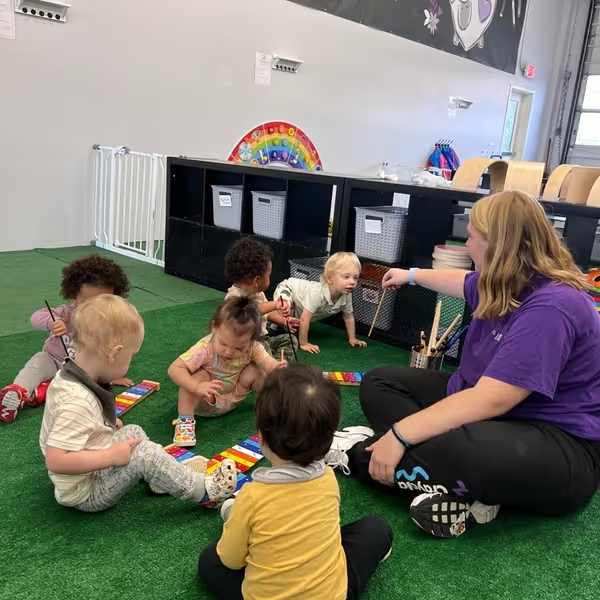
Learning spaces: Look for dedicated areas for different types of learning—STEM exploration, creative arts, music, dramatic play, and quiet reading zones
- Natural light and airflow: Kids thrive in bright, well-ventilated spaces
- Age-appropriate materials: Are toys and learning materials right for the age groups using them?
### The Interactions
Pay close attention to how teachers interact with children. Do they get down on the kids' level? Do they speak warmly and respectfully? Are they engaged and present, or distracted? The quality of these daily interactions matters more than almost anything else.
Watch the children too. Do they seem happy and engaged? Are they comfortable approaching their teachers? A room full of content, busy children tells you a lot.
### The Logistics
Don't forget the practical stuff:
-
Hours of operation: Make sure they work with your schedule. Are Oregon City centers open before you have to be at work and close after your workday?
-
Location: Is it conveniently located between home and work? A center that's easy to reach will make your daily life so much easier.
-
Flexibility: Does the center offer different program options? Some families need full-time care, while others might benefit from part-time programs.
## Understanding Program Options: Finding the Right Fit for Your Child's Age
Not all daycares serve all age groups, and even those that do may be stronger with certain ages than others. Make sure the center you choose has a solid program specifically designed for your child's current stage.
For Infants (3-14 months): Look for low teacher-to-child ratios, individualized feeding and napping schedules, and educators who understand infant development. Your baby needs consistent, responsive caregivers who will follow your home routines as closely as possible.
For Wobblers and Young Toddlers (14-35 months): This is the age of exploration and emerging independence. The right program will provide safe spaces for climbing, crawling, and walking, along with activities that build language skills and social-emotional development.
For Preschool and Pre-K (3-5 years): Children this age are ready for more structured learning experiences. Look for programs that introduce early literacy and math concepts, encourage problem-solving and critical thinking, and prepare children for kindergarten—all through play-based learning.
Many quality centers structure their programs by these specific age ranges, recognizing that a 15-month-old has very different needs than a 30-month-old, even though both are technically "toddlers."
## Questions Every Parent Should Ask
When you're touring potential daycares or talking with directors, come prepared with questions. Here are some of the most important ones:
- What is your teacher-to-child ratio? (Oregon has state requirements, but some centers exceed them)
2. What does a typical day look like for my child's age group?
3. How do you handle discipline and challenging behaviors?
4. What's your sick policy? (When must children stay home? When can they return?)
5. How do you communicate with parents about daily activities and milestones?
6. What's your curriculum approach, and how do you assess children's progress?
7. What are your safety and emergency procedures?
- What's your staff turnover rate? (High turnover can indicate problems and disrupts consistency for children)
9. Do you have dedicated spaces for different types of learning?
10. What's included in tuition, and what costs extra?
Don't be afraid to ask tough questions. A quality program will welcome your thorough vetting—they want families who are invested in their children's education.
## Red Flags to Watch For
Just as important as knowing what to look for is recognizing warning signs:
- Reluctance to let you observe: Quality programs welcome parent observation
- Disengaged or overwhelmed staff: Teachers should seem happy to be there
- Screen time: Young children should be actively engaged, not parked in front of screens
-
Vague answers about curriculum: Quality programs can clearly explain their educational approach
-
Poor communication: If it's hard to get information during enrollment, it won't get better once you're in
-
Lack of structure: While play-based learning may look casual, it should be intentionally planned
-
Unwillingness to provide references: Established programs should be happy to connect you with current families
## Making Your Decision: Trust Your Instincts
After you've done your research, toured facilities, and asked your questions, it's time to decide. Here's the truth: there may be several good options in Oregon City. The "right" choice is the one that feels right for your family.
Consider:
- Where did you feel most welcomed?
- Which teachers did you connect with?
- Where could you genuinely see your child thriving?
- Which program's philosophy aligns with your family's values?
Your gut feeling matters. If something feels off, keep looking. If a place feels like home, that's a powerful sign.
## Experience Harwell School in Oregon City
At Harwell School, we understand what Oregon City families are looking for because we've been listening to parents like you for years. Our Oregon City location at 14292 Marjorie Ln offers everything we've talked about in this guide:
-
Comprehensive age-specific programs from infants (3 months) through pre-kindergarten (5 years), including Infant (3-8 months), Older Infant (8-14 months), Wobbler (14-23 months), Toddler (24-35 months), Preschool (3-4 years), and Pre-K (4-5 years), plus FlexED options for families needing part-time care.
-
Play-based, year-round curriculum with dedicated spaces for STEM exploration, creative arts, and music
- Licensed educators who truly love what they do
-
Clear communication including daily app updates, monthly milestone check-ins, and three annual assessments with parent conferences
-
Convenient hours (7:00 AM to 5:30 PM, Monday through Friday) designed with working families in mind
We invite you to see the difference for yourself. There's no substitute for experiencing our learning environment in person, meeting our educators, and picturing your child growing and thriving here.
Schedule a tour of our Oregon City location and discover why so many local families trust Harwell School with their children. We can't wait to meet you and your little one.
Choosing the right daycare isn't just about finding care—it's about finding a community where your child will flourish and your family will feel truly supported. That's what we've built here at Harwell School, and we'd be honored to welcome you.
Want more tips on early childhood education? Visit our blog for helpful resources. We also have a location in Beaverton at 14480 SW Jenkins Rd (open 6:45 AM to 5:45 PM, Monday through Friday).
.webp)