-ai.svg)


As parents, we all want our children to thrive socially and emotionally. Yet, in today's world, many children experience surprising levels of social isolation. Whether a child is cared for by a loving grandparent, a nanny, or a parent working from home, the reality is that without regular, structured peer interaction, critical social development opportunities may be missing.
At Harwell Schools in Beaverton and Oregon City, we bridge this gap by providing a professionally guided environment where social connection is a fundamental component of the daily routine.
Recognizing Social Isolation in Young Children
Identifying social isolation begins with recognizing subtle behavioral indicators in children:
- Difficulty taking turns or sharing during occasional play opportunities.
- Anxiety or withdrawal when encountering new peers.
- Persistent parallel play (playing near but not with others) beyond a developmentally appropriate age.
- Struggling to read social cues or body language from other children.
- Limited conflict resolution skills when disagreements occur.
Why Traditional Solutions Often Fall Short
Many well-intentioned solutions provide inconsistent results for building social foundations:
-
Occasional Playdates These often lack the consistency needed to move children beyond initial social hesitancy.
-
Park Visits While fun, these offer unpredictable social opportunities and lack the guided structure needed to help children navigate complex interactions successfully.
- Home-Based Care: Nannies or grandparents provide primarily adult-child interaction, which follows different patterns than the peer-to-peer dynamics essential for growth.
The Harwell Framework for Social Success
If you are concerned about your child’s social development, Harwell provides a systematic approach to building core skills through our Social-Emotional Learning (SEL) focus.
- Mastering Entry Skills (Joining the Group)
At Harwell, entry skills develop naturally through daily opportunities to join ongoing play. Our certified teachers act as social coaches, helping hesitant children observe what is happening and join with a complementary role or a "gift"—such as offering a block to a peer building a tower.
- Turn-Taking and Sharing in Specialty Spaces
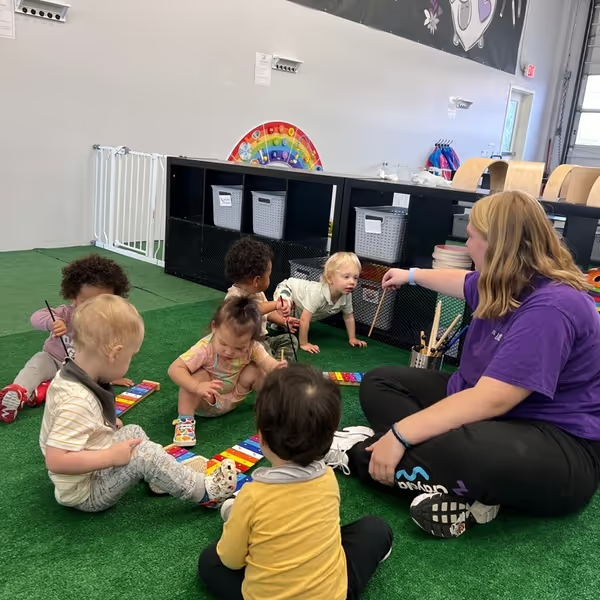
We utilize our dedicated science, art, and music rooms to create natural sharing opportunities. By providing high-interest materials in these spaces, we create moments where children must negotiate and practice concepts like "your turn, my turn" under professional guidance.
- Emotion Coaching and Regulation
Harwell classrooms incorporate emotional vocabulary and regulation techniques—such as deep breathing or naming feelings—into the daily curriculum. Our teachers are trained to recognize escalating emotions before they lead to withdrawal, providing preemptive support that helps children navigate social friction.
- Collaborative Problem-Solving
Consistent peer groups at Harwell allow children to build deep relationships where they learn to work through disagreements rather than avoiding them. Our curriculum includes collaborative projects—such as creating a large-scale art piece—where children must negotiate space and share resources toward a shared goal.
The Harwell Advantage: Support for the Modern Family
We offer more than just a classroom; we provide a comprehensive support system for your family’s social and professional needs:
-
Institutional Reliability Unlike a single caregiver, Harwell provides a team-centered approach that ensures your child’s social routine is never interrupted. We are open Monday through Friday.
-
FlexEd Options For hybrid or WFH families, our part-time enrollment allows children to access professional socialization without a full-time commitment.
-
ProCare Parent App You stay connected to your child's social breakthroughs with real-time digital updates and photos.
Conclusion: Investing in Social Capability
Social isolation is a growing concern, but it can be addressed through intentional, professionally guided action. By choosing a high-quality environment that prioritizes research-backed SEL, you are giving your child more than just "friends"—you are giving them the social foundation they need for lifelong success.
.webp)