-ai.svg)


In a world where we are more connected than ever through technology, modern parents in Beaverton and Oregon City often find themselves surprisingly isolated.
The traditional village that once surrounded families—extended relatives living nearby and neighborhoods where everyone knew each other—has largely disappeared for many.
This isolation isn't just emotionally challenging; it has real consequences for parental well-being, child development, and family resilience. However, Harwell Schools is uniquely positioned to serve as the modern village parents need—a community hub where families connect and support each other.
The Vanishing Village: Why Modern Parents Feel Alone
The isolation of modern parenting is backed by research and lived experience:
- Geographic Mobility: The average American moves nearly 12 times in their lifetime, often separating new parents from extended family who might have provided day-to-day support.
- Weakened Neighborhoods: A Pew Research study found that only 26% of Americans know all or most of their neighbors, a dramatic decline from previous generations.
- Work Demands: Today’s parents often face longer commutes to campuses like Nike, Tektronix, and Analog Devices, leaving less energy for community building.
- Digital Illusions: While parents may have hundreds of online friends, these relationships rarely provide the practical support—like emergency childcare—that physical presence offers.
The science shows this matters: Studies link social isolation to higher rates of depression and parenting stress. Research indicates that socially connected parents experience significantly lower stress than those lacking strong community ties.
The Hidden Village: How Harwell Fills the Gap
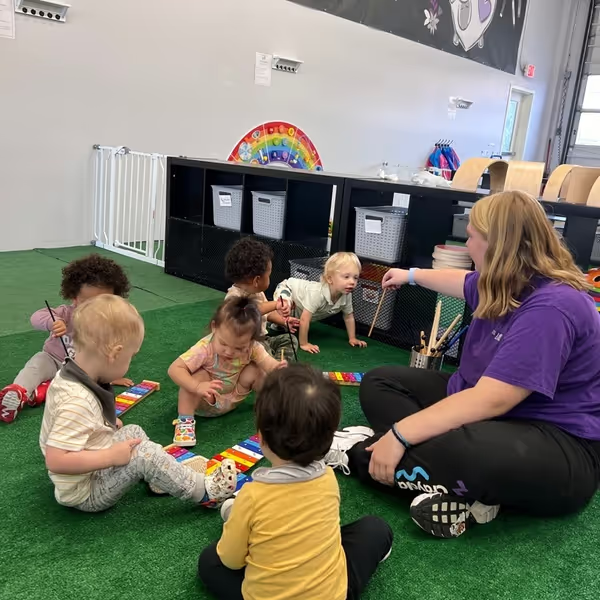
While many view childcare simply as a service, Harwell Schools functions as a community hub that provides the village modern families desperately need:
- A Community of Peers: Our schools bring together parents navigating the same developmental challenges at the same time—from the Infant (3–8 months) stage through Pre-K (4–5 years).
- Professional Support Network: Our certified educators are trained in child development and can collaborae during challenging parenting moments.
- Dedicated Learning Spaces: Our rooms, along with secured indoor play space, provide natural gathering places where parents can connect during drop-off or pickup.
- FlexEd for the WFH Parent: For hybrid or work-from-home families who often feel the most isolated, our FlexEd part-time enrollment options provide a consistent professional community without a full-time commitment.
The Research: Community Childcare Makes Stronger Families
The benefits of a community-centered environment like Harwell extend far beyond convenience:
- Reduced Burnout: Parents with strong connections through early education programs report substantially lower rates of parental burnout.
- Improved Confidence: Socially connected parents show greater parenting confidence and more consistent guidance strategies.
- Better Child Outcomes: Children whose parents are socially connected through their school show stronger social skills and better emotional regulation.
- Greater Resilience: Families connected through a school community demonstrate greater resilience when facing challenges like job loss or health problems.
Conclusion
The traditional village might be different than it used to be, but the human need for community remains unchanged. By choosing a school that prioritizes Social-Emotional Learning (SEL) and professional standards, parents in Beaverton and Oregon City can build a new kind of village—one that is essential for the health of both parents and children.
.webp)